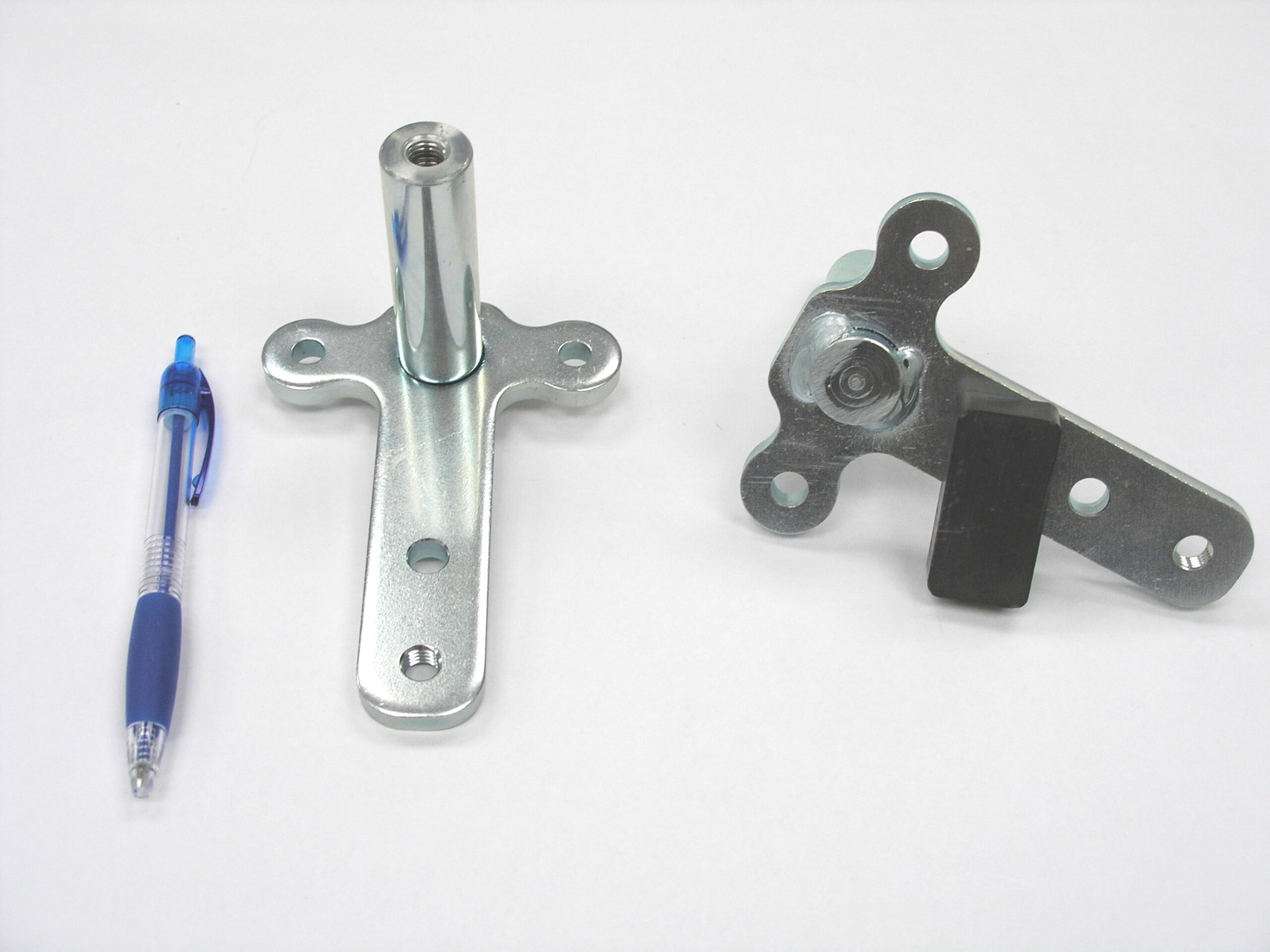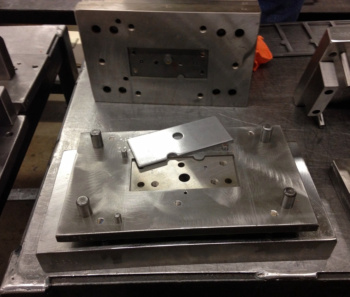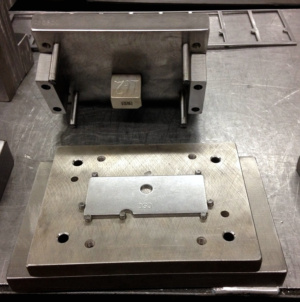





Below roughly 100,000 pieces a year, or when the design is still changing, low-volume (short run) tooling usually wins. Above that, with a frozen design and a form factor that supports a progressive die, piece price drops. Both thresholds come from how we quote stampings today. Aluminum, galvanized, and steel parts follow the same volume logic; material choice still belongs on the print review.
Book a 15-minute call and we will walk your volumes and print with you.
Break-even: low-volume tooling vs progressive die
| Low-volume / short run tooling | Progressive die | |
|---|---|---|
| Annual volume | Roughly 2,500–100,000 | Greater than roughly 100,000 |
| Tooling investment | Lower NRE (pancake inserts in a master holder) | Higher dedicated multi-station die |
| Start-up time | Weeks rather than months | Longer than short run — plan the program timeline |
| Piece price | Higher than progressive at high volume | Lower at high volume |
| Design-change cost | Economical mid-program changes | Best after design freeze |
| Tolerance repeatability | Good for many OEM brackets and plates | Tight, repeatable features in fixed stations |
Design-freeze checklist before you buy a progressive die
- Lifetime volume and program length support die amortization
- Tolerance-critical features are flagged on the print
- Coil material availability and strip layout are workable
- Annual volume, release quantities, and first-article timing are clear
- Secondary ops (welding, hardware, finishing) are on the quote package
The common path: start short run, convert to progressive
When the volume forecast is uncertain, a common path is starting in short run stamping to prove the part and the demand, then converting to a progressive die once volume justifies the investment. We can review both paths against the same print. See also the short-run stamping part conversion example.
What does progressive die stamping cost?
We do not publish dollar ranges here. Cost drivers are die stations and complexity, material and gauge, tolerance-critical features, secondary operations, and how fast the die amortizes across real annual and lifetime volume. Send the print and volumes and we will show the math on a call or through an RFQ package.
Frequently Asked Questions
Should I use a progressive die or low-volume tooling for an aluminum bracket at 20,000 a year?
At about 20,000 a year, low-volume / short run tooling is usually the better buy unless the design is frozen and the payback math still favors progressive. We compare both against your print.
At what volume does a progressive die pay for itself?
Generally above roughly 100,000 pieces per year, but the honest answer depends on part complexity, material, and program life. The die investment has to amortize across real volume.
Can low-volume tooling hold the same tolerances as a progressive die?
Progressive dies are strong at repeatable tight tolerances because features form in fixed sequential stations. Short run tooling is a good fit for many OEM brackets and plates; flag tolerance-critical features so we account for them in the path we recommend.
Can I start with short run tooling and switch to a progressive die later?
Yes. That is a common path when demand is still proving out. We review both paths against the same print.
Book a 15-minute call. Secondary path: RFQ form.