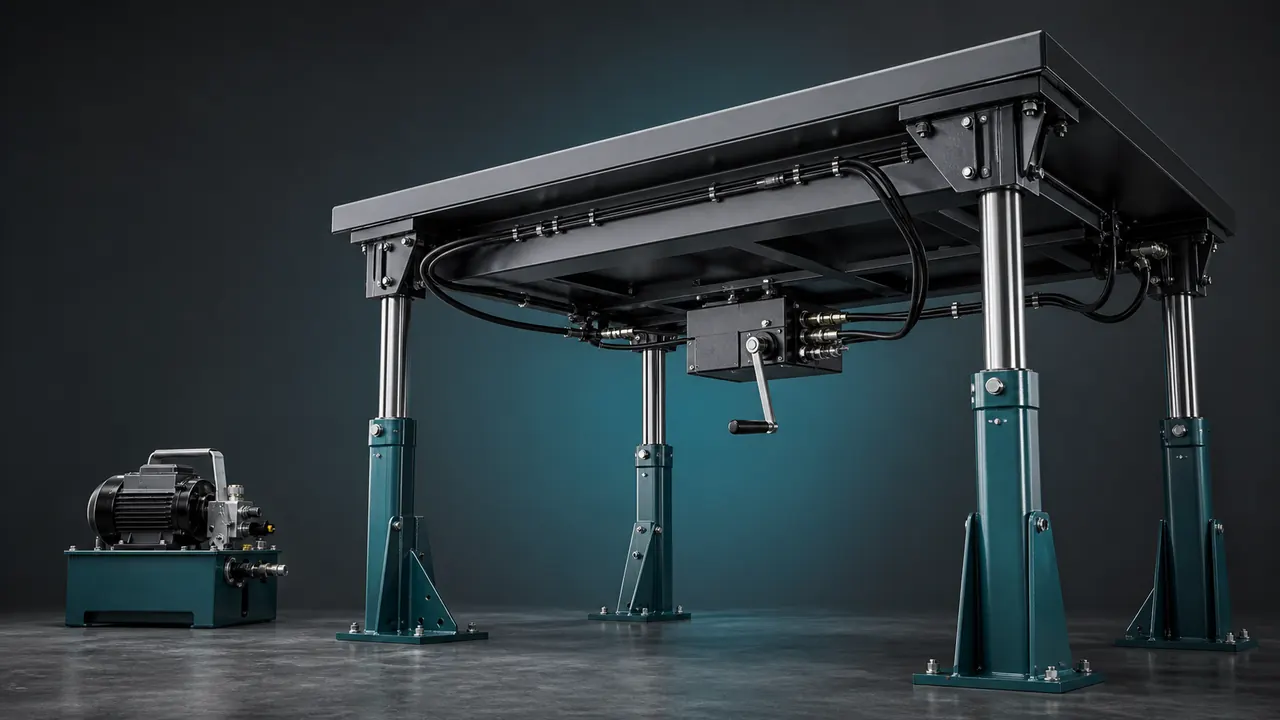
Conceptual four-point synchronized bolt-on lift system under an industrial workbench
PROCESS CONCEPT — NOT A FACILITY OR CUSTOMER INSTALLATION

MANUFACTURING PATH 06.3

Bolt-On Lift Systems

Start with load, travel, stability, and installation—not a preselected kit.
REVIEW THE PATH
STARTING DECISION

What must the workstation lift and control?

  • Moving and static load with center of gravity
  • Travel, raised/lowered heights, and cycle rate
  • Manual or motor-driven operation
  • Mounting, routing, stability, guarding, and controls
PATH FAMILYOther Custom SolutionsPRIMARY INPUTDrawing + requirementsQUOTE FOCUSDelivered component scopeFinal fit depends on the actual geometry, material, volume, tooling, secondary operations, test, timing, and proposed manufacturing resource.
PROCESS FIT BEFORE PIECE PRICE

Make the manufacturing question explicit before routing the RFQ.

A bolt-on lift review should treat the workstation, load, center of gravity, travel, structure, actuator synchronization, controls, tubing, installation, guarding, and validation as one system.

Lupton helps organize the open questions so the proposed manufacturing resource can confirm process, capability, tooling, quality evidence, pricing, and lead time against the actual program.

01

Define the part

Start with geometry, material, interfaces, performance, volume, and timing.

02

Compare the path

Compare tooling, piece economics, secondary operations, change risk, and delivered scope.

03

Confirm the resource

Verify the facility, equipment, quality plan, capacity, test method, and responsible team.

CAPABILITY & RFQ SCOPE

Keep the process and delivered-part scope together.

Each card remains a starting point. The drawing and program requirements determine the actual manufacturing fit.

01

Load & motion

Define the actual load case before selecting an architecture.

  • Static and moving load with center of gravity
  • Required travel and raised/lowered height
  • Cycle rate, speed, synchronization, and allowable deflection
  • Stability, side load, impact, and misuse conditions
02

Operating architecture

Review the operator, power, control, and failure behavior.

  • Manual crank-driven displacement review
  • Motor-driven alternative review
  • Four-point cylinder and tubing layout
  • Controls, stops, position behavior, and safe recovery
03

Installation & validation

The existing frame and installation environment determine whether bolt-on adjustment is practical.

  • Workstation structure and mounting interfaces
  • Tubing/cable routing, clips, clearance, and pinch points
  • Guarding, installation instructions, and service access
  • Load, travel, stability, cycle, and acceptance testing
RESOURCE & QUALITY GATE

Confirm the proposed resource and evidence before award.

Legacy equipment, certification, capacity, tolerance, savings, product-performance, and service-life claims are not treated as blanket Lupton capabilities. Verify them against the product and manufacturing resource actually quoted.

Verify before selection

01Proposed product, manufacturing resource, and responsible technical contact
02Current configuration, materials, interfaces, and operating limits
03Critical dimensions, functional acceptance criteria, and inspection plan
04Required testing, records, certifications, and traceability
05Secondary operations, packaging, installation, and service considerations
06Availability, release quantity, program timing, and change-control plan
MAKE THE RFQ EASIER TO ROUTE

Send the drawing and the requirements that change the manufacturing path.

Unknowns are acceptable. Label them so the next technical review resolves them instead of burying assumptions in a quote.

Helpful starting information

01Workstation drawing, current structure, and mounting access
02Static/moving load and center of gravity
03Travel, height range, speed, and cycle rate
04Manual or motor operation and available power
05Controls, guarding, environment, service, and installation constraints
06Required test, documentation, quantity, and timing

WANT TO DISCUSS THE PROJECT?

Review the part, open process questions, volume, tooling, timing, and current sourcing issue.

BOOK TIME WITH OUR TEAM

NOT SURE WHICH PATH FITS?

Start with the part and the requirement—not a process guess.

Lupton can help organize the drawing, material, volume, performance, timing, and open questions before the RFQ gets messy.