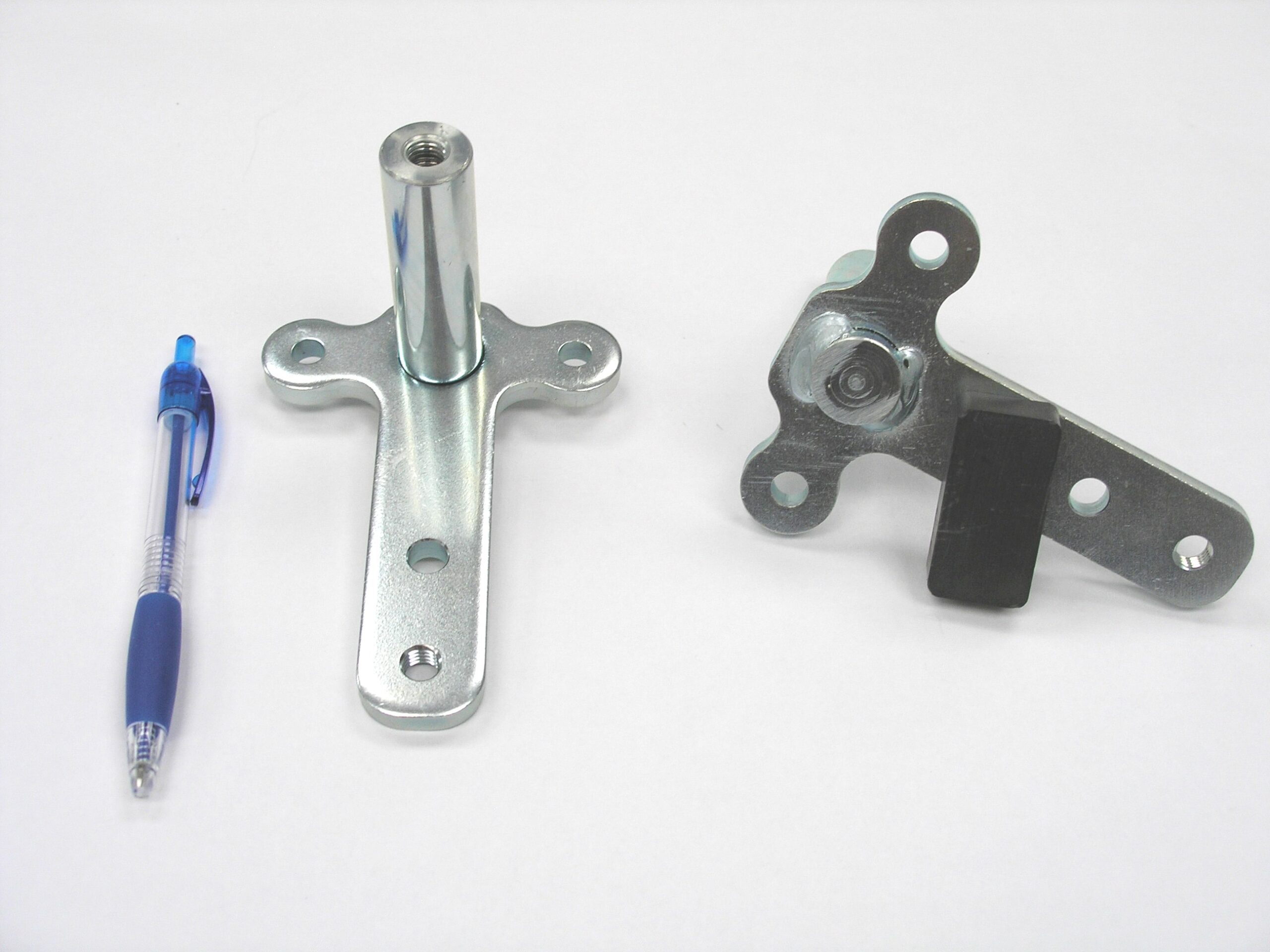





Short run metal stamping fills the gap between laser-cut fabrication and progressive dies. If your sheet metal part runs roughly 2,500 to 100,000 pieces a year and fits inside about 20" x 30" in the flat, hard tooling may pay for itself without progressive-die NRE. Lupton reviews your flat pattern, material, features, and annual volume and helps determine whether short run stamping, sheet metal fabrication, or progressive dies is the right cost path for the part.
How the process works
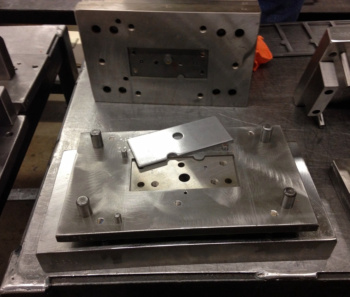
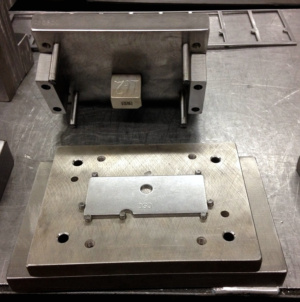
Short run stamping uses steel die inserts (pancake dies) fitted into a master die holder to blank, pierce, and form sheet metal on traditional mechanical stamping presses. Secondary presses and press brakes add formed features. Traditional fabrication operations – welding, deburring, forming, machining, and finishing (plating, painting, heat treating) – combine with the stampings to produce a finished part or assembly.
Above roughly 20" x 30" in the flat, the tooling investment gets hard to justify against unit-cost savings – that's when sheet metal fabrication is usually the better path.
Characteristics of a good short run stamping candidate
- Small to mid-size form factor: under about 20" x 30" in the flat
- Low to mid volumes: roughly 2,500 to 100,000 pieces per year
- Lower NRE than progressive die tooling
What Lupton can review
- Part prints or flat patterns, with material and gauge callouts
- Annual volume and release quantities – the biggest driver of fab vs. short-run vs. progressive
- Secondary operations on the print: welding, hardware insertion, machining
- Finishing requirements: plating, painting, heat treating
- Whether your current fabricated part would cost less as a stamping at your volumes
Common fit / applications
- Short run stampings such as brackets, clips, plates, chassis components, and enclosure parts
- Parts currently laser-cut and brake-formed where volume has grown past the fab break-even
- Programs not yet at progressive-die volume but paying too much per piece in fabrication
- Parts feeding welded or finished assemblies
What to include with an RFQ
Part print or flat pattern (PDF and/or STEP)
Material spec and gauge
Annual volume and typical release size
Finishing and secondary operation requirements
Timeline – first article date and production start
Unsure whether your fabricated part should become a stamping?
Tell us what you are making, your expected annual volume and the cost or sourcing issue you want to solve. We can start with those questions and identify what information is needed for a manufacturing review. If your print is ready, include it with the material, finishing requirements and timing.
Ask a stamping question or send drawings for an RFQ review.
Frequently Asked Questions
What volume justifies short run stamping tooling?
As a rule of thumb, 2,500 to 100,000 pieces per year. Below that, fabrication usually wins; well above it, progressive dies start to make sense. Your part's geometry and material shift the break-even, which is why we review actual prints and volumes.
How is short run tooling cheaper than a progressive die?
Pancake die inserts run in a shared master die holder, so you're tooling the features – not building a dedicated multi-station die. NRE is a fraction of progressive tooling. Short run tooling typically ships in weeks rather than months.
My part needs welding and plating too. Separate quote?
No – include it all in the RFQ. Short run stampings routinely combine with welding, deburring, machining, and finishing to deliver a completed part or assembly, and it should be quoted that way.
My part is bigger than 20" x 30" in the flat. Now what?
Above that size, tooling investment is hard to justify against per-piece savings. Sheet metal fabrication is usually the better path – send the print and we'll confirm.
Related Manufacturing Paths
Progressive Die Stamping | Sheet Metal Fabrication | Prototyping | Request an RFQ review