





Gas Springs
Other Custom Solutions / Gas Springs
Manufacturing path 06.4
Gas Springs
We define the force curve and the motion first, then choose a locking or non-locking configuration.
Start with the function
A gas spring is a sealed hydropneumatic actuator. Getting it right depends on the mechanism geometry, force through travel, stroke, package, end fittings, mounting angles, temperature, cycle rate, damping, locking behavior and the safety strategy.
We confirm process, tooling, quality evidence, pricing and lead time against your actual program before we quote.
Where we make it: United States, Canada and Mexico.
What we review
Force & geometry
The force requirement changes with mechanism geometry and position.
- Load, center of gravity, pivot locations and motion path
- Required force through the full travel
- Stroke and extended and compressed lengths
- Available envelope and interference check
Configuration & mounting
How the mechanism should move, hold, release and stop.
- Locking or non-locking configuration
- Damping and end-of-stroke behavior
- End fittings, brackets, orientation and mounting angles
- Release mechanism, controls and adjacent hardware
Environment & validation
We treat the gas spring as part of the safety and service plan.
- Temperature, corrosion, contamination and outdoor exposure
- Cycle rate, expected life and duty pattern
- Overtravel, guarding, redundancy and failure behavior
- Force verification, functional test, documentation and replacement plan
Published examples
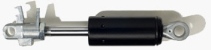

What we confirm before award
- The product, the site that builds it and the technical contact on your program
- Configuration, materials, interfaces and operating limits
- Critical dimensions, functional acceptance criteria and the inspection plan
- Required testing, records, certifications and traceability
- Secondary operations, packaging, installation and service
- Release quantity, program timing and change control
What to send
Unknowns are fine. Label them and we will work through them in the review instead of burying assumptions in a quote.
- Mechanism drawing with pivots, load and center of gravity
- Required motion, support force and positions
- Stroke, extended and compressed length, and envelope
- Locking, release, damping and end-fitting requirements
- Temperature, corrosion, cycle, orientation and safety conditions
- Quantity, validation, documentation and timing
Frequently asked questions
Locking or non-locking gas spring?
It depends on what the mechanism has to do. A non-locking spring supports, counterbalances or damps motion. A locking spring also holds a position. We start from the force through travel, the stroke and the positions you need, then pick the configuration.
What do you need to size a gas spring?
The mechanism drawing with pivots, load and center of gravity, the force and positions you need, stroke and extended and compressed length, the end fittings and mounting angles, and the temperature, cycle and safety conditions.
How do you validate a gas spring application?
We check force through travel, cycle rate and expected life, overtravel and failure behavior, and set the force verification, functional test, documentation and replacement plan for the program.
Related paths
Related reading
Send the drawing and the requirements that change how the part gets built. We will tell you how we would build it. Start your RFQ, book time with our team or call (585) 393-4999.